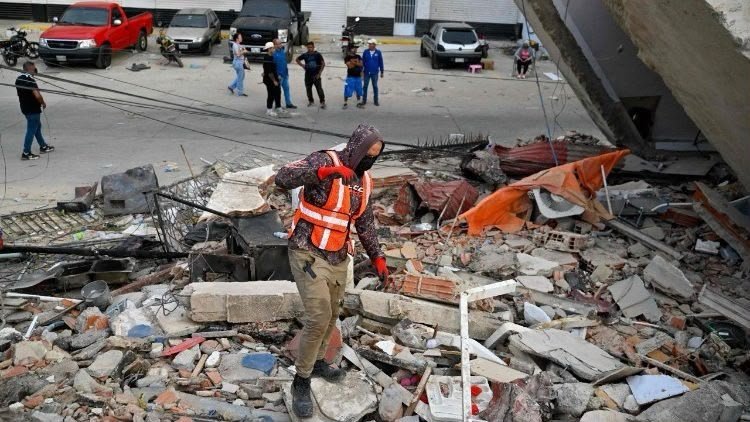
The fury of nature has turned vast areas of the South American nation Venezuela into rubble. Two powerful earthquakes on Wednesday brought daily life to a standstill in moments. Four days after the disaster, rescue operations are still underway. According to the latest data, the death toll in this horrific disaster has risen to 1,450. As many as 3,238 people have been injured, and 3,142 families have been affected.
Jorge Rodríguez, President of Venezuela’s National Assembly, said that after two strong earthquakes measuring 7.2 and 7.5 in magnitude, 430 mild and moderate aftershocks have been felt so far. As a result, an atmosphere of fear still prevails in many areas. Thousands of rescue workers remain engaged in pulling people trapped under debris and providing aid to affected families.
Expressing deep condolences to the thousands of affected families, Rodríguez said the disaster has plunged the entire nation into profound grief. He added that all government agencies have been deployed in rescue and relief operations.
There is still no sign of the impact of the disaster easing. Venezuela’s seismological research institute ‘Funvisis’ confirmed another earthquake of magnitude 4.1 on Saturday as well. The epicenter was about 35 kilometers west of the port city of La Guaira. Occurring at a depth of just five kilometers, the tremor was felt across a wide area.
This new quake has again terrified residents of Caracas and its surrounding areas. Fearing collapsing buildings, many people came out of their homes and took shelter in open spaces. La Guaira, which suffered the most damage in Wednesday’s devastating earthquake, has already been declared a disaster-hit area by the government.
Notably, numerous buildings were reduced to rubble in moments during Wednesday’s two powerful quakes. Landslides also occurred in many places. With road connectivity cut off in coastal and hilly areas, rescue and relief operations are facing major challenges.
With fears that many more people remain trapped under the rubble, agencies concerned are continuing rescue operations at full pace. One aftershock after another has made the rescue efforts even more complex. In view of this situation, disaster management authorities have urged the public to remain cautious. The death toll is also feared to rise further until rescue operations are complete.