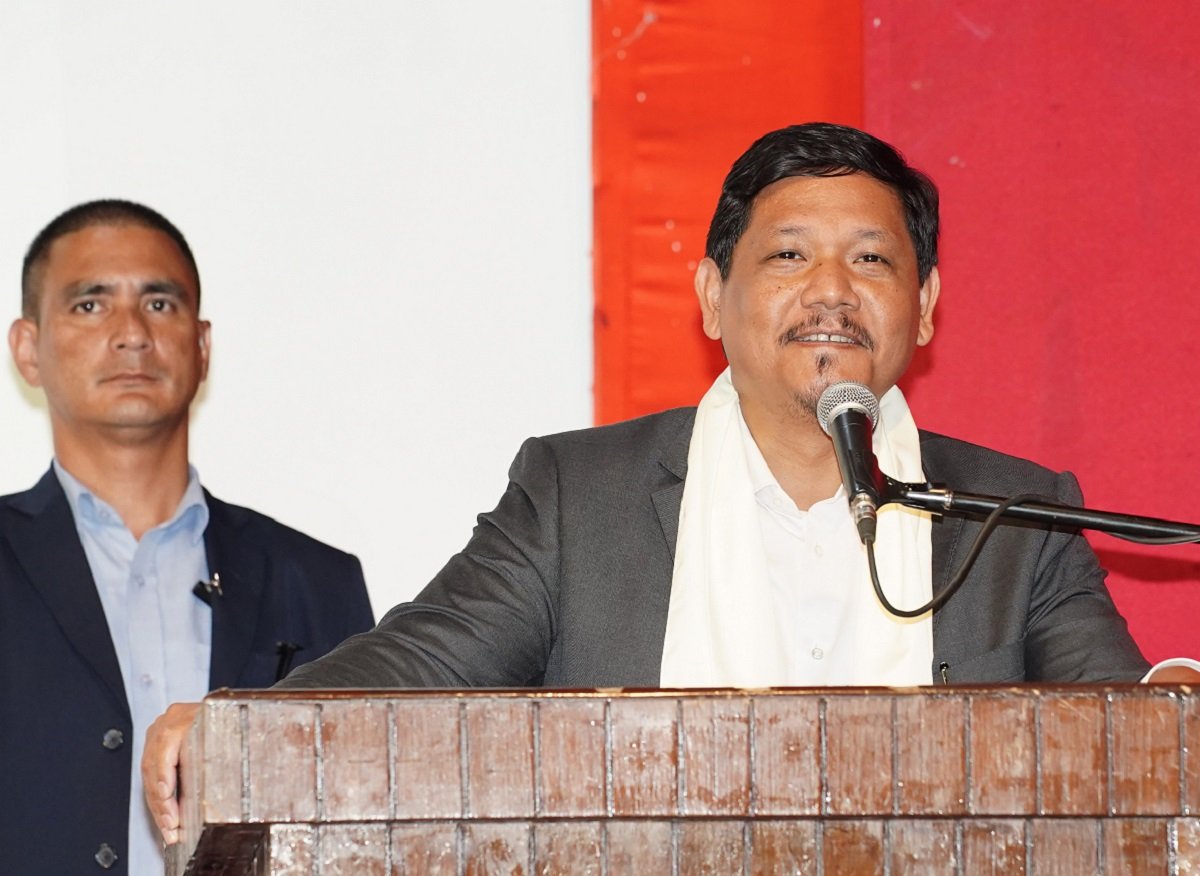
Meghalaya continues to remain vulnerable to a resurgence of militancy, and the situation should not be taken lightly, Leader of the Opposition Mukul M. Sangma has warned. He said there was “no room for complacency” amid concerns over the movement of unidentified people allegedly carrying sophisticated weapons.
Reacting to the recent incident at Songsak, Sangma said the state government must thoroughly examine the intelligence inputs available with agencies responsible for internal security and assess their wider implications.
According to Sangma, the available information suggests that the recent incident may represent only a small part of a larger development. He said the government should therefore look beyond the immediate incident and remain alert to possible attempts to revive militant activities.
Sangma said he had raised similar concerns several times in the Meghalaya Legislative Assembly, including about two years ago. He had then drawn the government’s attention to the possibility of different forces coming together to establish a new militant organisation.
He appreciated the Meghalaya Police for successfully busting small groups in the Garo Hills, but stressed that recent developments required continued vigilance. Referring specifically to the Songsak incident, he said previous intelligence inputs had indicated movement in the area, making the matter a serious concern.
“The movement of unidentified people carrying sophisticated arms is a fact. Therefore, there is no room for complacency, and we cannot take things for granted,” Sangma said.
He also stressed that restoring peace and sustaining peace were two different challenges. While peace may be restored through immediate security measures, sustaining it requires long-term commitment, conviction and the proper discharge of responsibilities by the authorities.
Sangma further said the government must identify and address the factors that could encourage young people to join militant organisations. He warned that certain forces could attempt to recruit individuals into what he described as an “evil design of waging a war against the state.”
Recalling Meghalaya’s past experience with militancy, Sangma said the state had overcome similar challenges before. However, he pointed out that its difficult terrain and geographical location continued to make it vulnerable.
He referred to developments across different parts of the state, including the Khasi-Jaintia Hills, Garo Hills, West Khasi Hills and South West Khasi Hills, and said militant movements did not respect interstate boundaries.
Sangma also recalled the period following the suspension of operations with the ANVC in 2004. He said several members of the organisation remained in the dense forests of South West Khasi Hills and adjoining areas of South Garo Hills.
According to him, the difficult terrain and corridors in these areas had previously been used as training grounds and transit routes by insurgent and militant organisations of the Northeast, including the NDFB and ULFA.
Sangma reiterated that Meghalaya would always remain vulnerable to such threats and urged the authorities to maintain constant vigilance.
“Therefore, Meghalaya remains vulnerable, always. There is no space for complacency, nor can we take things for granted,” he said.