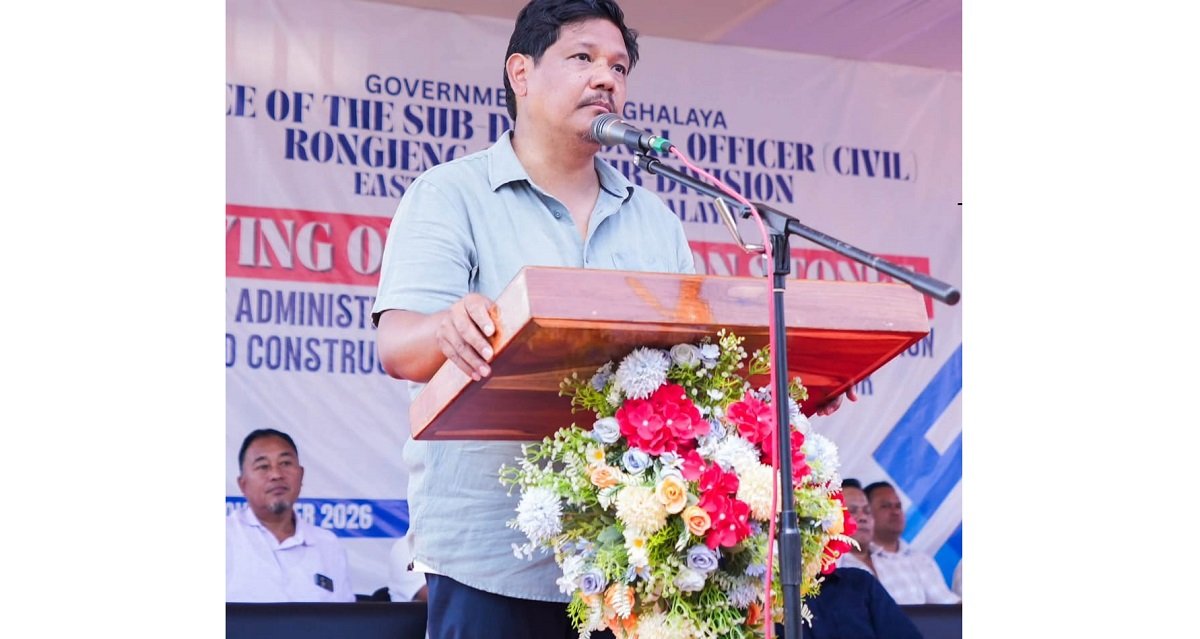
Meghalaya Chief Minister Conrad K. Sangma on Tuesday termed the demand that only tribals should contest and vote in the Garo Hills Autonomous District Council (GHADC) elections, as genuine.
“The demand that only tribals should contest and vote in GHADC elections is a genuine one, as the Council was created to protect tribal rights, and the government has taken this decision with the support of the people,” Sangma said.
Defending the decision to restrict voting and candidature in the GHADC elections to Scheduled Tribe members, he said it was a genuine demand rooted in the council’s constitutional mandate to protect indigenous rights and interests.
Sangma said the GHADC was established to safeguard tribal interests and that limiting electoral participation to eligible tribal members was therefore justified.
He maintained that the government had taken the decision with the support of the people.
The issue has long been a point of contention in Garo Hills, with several organisations campaigning for the exclusion of non-tribals from the council’s electoral process.
The demand gained momentum through sustained public protests and became a major political and administrative challenge.
Agitation intensified in March this year when protests over non-tribal participation turned violent, resulting in two deaths. The elections, originally scheduled for April 10, were postponed amid the unrest.
In the wake of the prolonged demand, the state government introduced amendments to the GHADC election rules, providing for separate electoral rolls for each constituency and restricting voting and candidature to members of Scheduled Tribes recognised in relation to Meghalaya.
The voting age was also reduced from 21 to 18 years.
The changes followed the GHADC’s approval of the amendments and the subsequent legal process.
An earlier executive notification seeking to impose tribal certificate requirements had been set aside by the Meghalaya High Court, which held that such restrictions had to be introduced through the prescribed rule-making procedure.