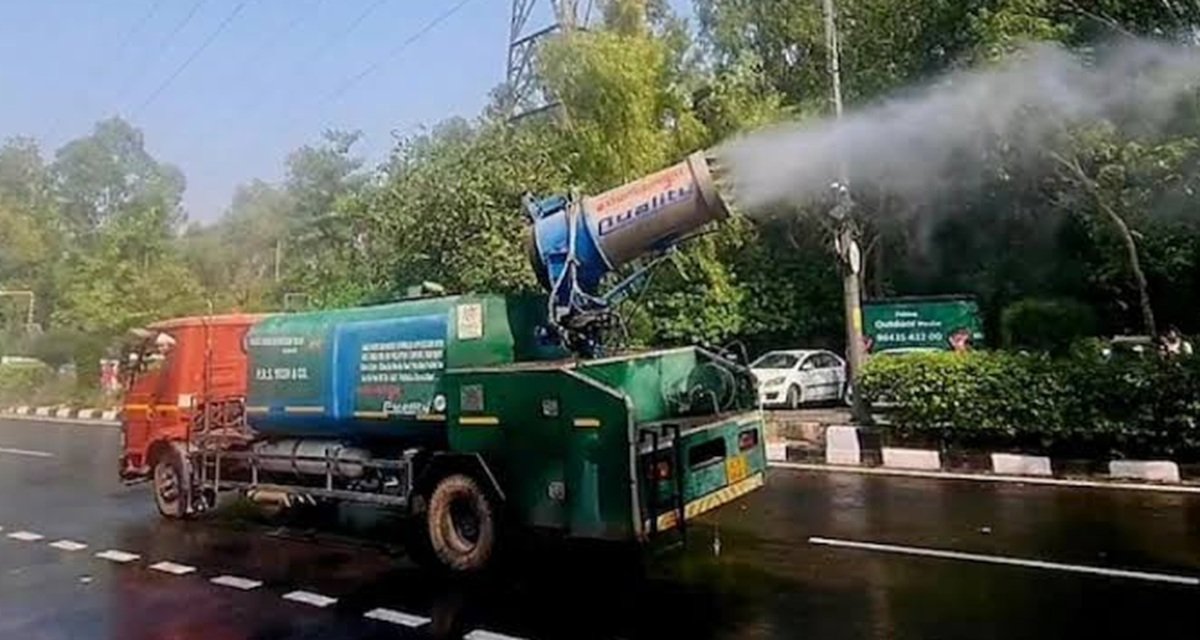
Delhi awoke to hazardous environmental conditions on the morning after Diwali as air quality indices climbed past 350 citywide and surpassed 400 in several critical sectors, leading the Delhi government to dispatch mobile anti-smog guns across the capital to wash airborne pollutants out of the sky. These specialized spray vehicles operate by forcing tank-fed water through high-pressure propulsive nozzles, generating nebulized mist droplets between 50 and 100 microns that shoot up to 150 feet into the air at volumes between 30 and 100 liters per minute, generating a localized rain effect that binds suspended dust along with PM2.5 and PM10 particles and brings them to the ground. While such mist cannons serve established roles in industrial dust suppression across mining, coal handling, stone crushing, and post-demolition sites like the Noida twin towers, environmental scientists emphasize that their corrective impact remains strictly temporary and confined to the immediate operational space. The severe air degradation builds upon Sunday’s 24-hour average AQI of 376, during which 22 monitoring stations measured ‘very poor’ air, 12 registered ‘severe’ air, and Jahangirpuri reached a high of 463, before extensive nighttime firecracker bursting drove overall pollution parameters past the 400 severe benchmark across multiple city stations.
Delhi Battles Hazardous Air Post-Diwali: Anti-Smog Guns Deployed to Mitigate Severe Pollution