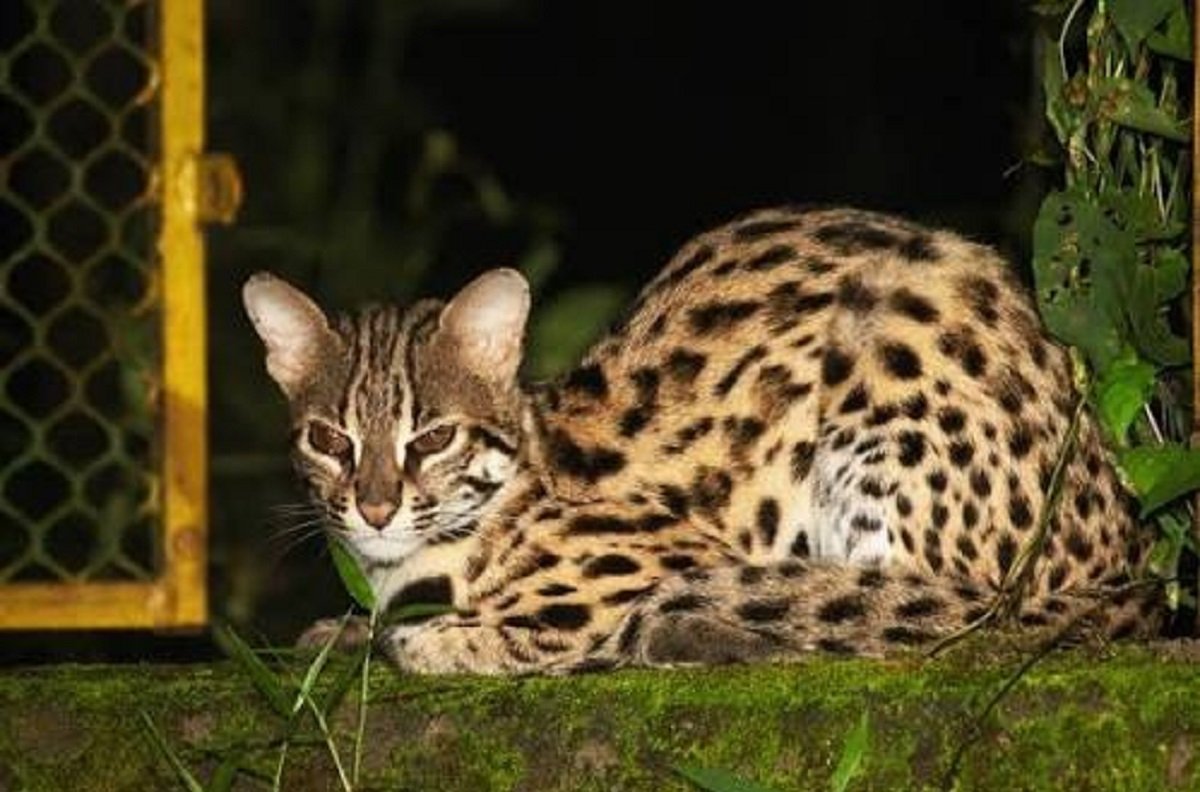
The sighting of an Asian Leopard Cat near the forested slopes of Lum Shyllong has added an unexpected wildlife angle to the growing controversy surrounding the proposed Shillong Ropeway Project, as questions mount over the project’s environmental impact and regulatory compliance.
An Asian Leopard Cat (Prionailurus bengalensis), locally known as khla thapsim, was found wandering near an under-construction building at Lumparing on May 23. The rare sighting is significant because the animal is believed to have strayed from the nearby Lum Shyllong forest, an area at the centre of ongoing concerns over biodiversity and habitat disturbance linked to the ropeway project.
A labourer who helped rescue the animal said they first noticed the wild cat while preparing to leave work for the day.
“We were about to leave when we spotted the animal near the building. Some trainees from a nearby weaving training institute alerted us after seeing it. We caught the cat and handed it over to the building owner, who later informed the Wildlife Department,” he said.
According to him, wildlife officials subsequently arrived and took custody of the animal. Construction of the building where the cat was found was completed around two months ago.
The incident has renewed attention on wildlife movement in the Lumparing-Lum Shyllong belt, where conservationists and local residents have expressed concerns about the ecological consequences of the proposed ropeway project.
Meanwhile, opposition to the Rs 151-crore Shillong Peak Ropeway Project has intensified, with the Khasi Hills Autonomous District Council (KHADC) preparing to challenge the project in court.
KHADC Executive Member in-charge of Elaka Affairs, Denzil R. Chen, said the Council was examining legal provisions and the agreement between the state government and the contractor, KEC-TCL (JV), before approaching the High Court.
The Council has questioned how a private company can execute the project without obtaining a mandatory trading licence under the United Khasi-Jaintia Hills District (Trading by Non-Tribals) Regulation, 1954.
Chen argued that the issue was not ownership of the land but the Council’s regulatory authority over commercial activities undertaken by non-tribal entities within its jurisdiction.
“Even if the land belongs to the government, a private company operating there is still required to obtain a trading licence from the Council,” he said.
KHADC has also maintained that the company has yet to secure all required No Objection Certificates (NOCs) from the concerned Dorbar Shnong and the Syiem of Hima Mylliem, prerequisites for obtaining a trading licence.
The council’s position is supported by a Gauhati High Court judgment, which held that the award of a government contract does not automatically exempt a private firm from KHADC licensing requirements.
The dispute escalated on October 27 when KHADC sealed the ropeway project site at Madan Laban, citing violations of licensing regulations. The Tourism Department later reopened the site, arguing that the land belongs to the state government and that construction work had not commenced.
The state government subsequently lodged an FIR against a KHADC enforcement official following the sealing of the project site, further deepening the confrontation between the two sides.
Apart from regulatory concerns, KHADC has also raised environmental objections. Chen alleged that the government permitted extensive tree felling for the project and argued that the ropeway alignment should have been designed to avoid damage to the forest canopy.
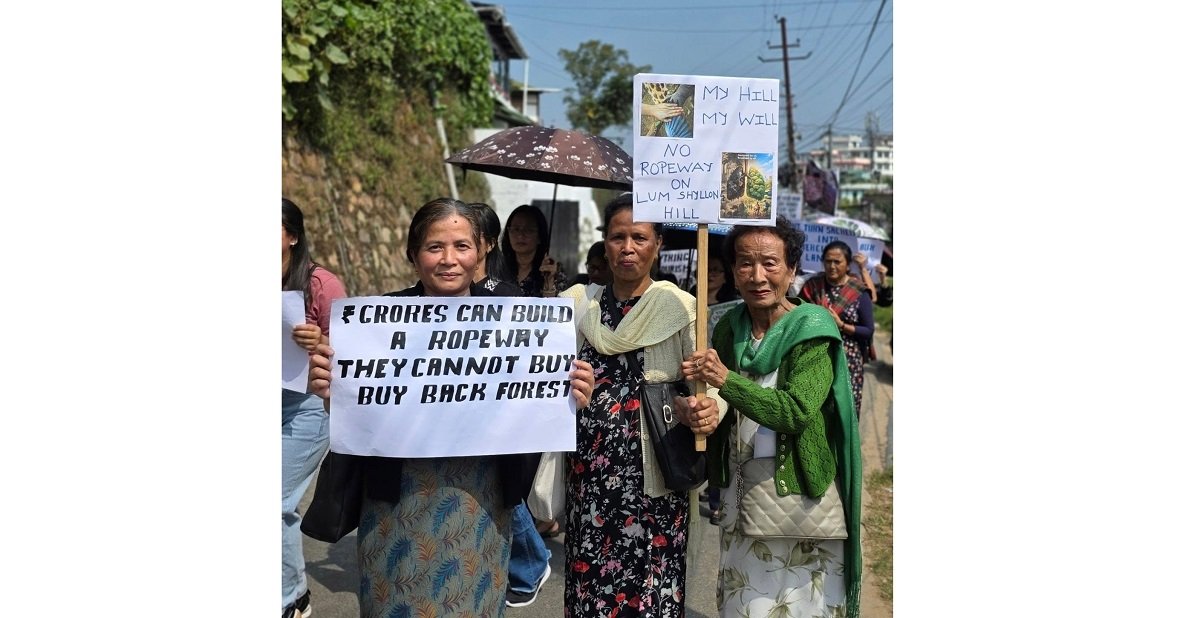
An estimated 545 trees have reportedly been cut down for the project, triggering opposition from local residents, women’s groups, civil society organisations and the Joint Action Committee against the ropeway.
With KHADC seeking access to the original tender documents and contractual agreement before moving the High Court, the dispute has expanded beyond licensing issues to include questions of environmental protection, local governance and the state’s handling of the project.