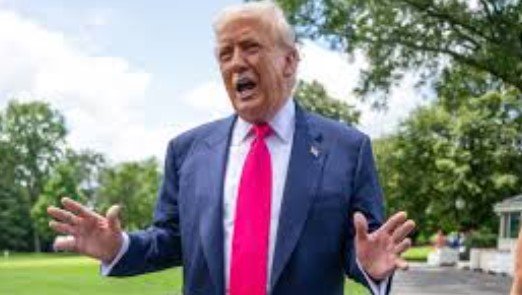
During a tense press briefing on Tuesday, May 5, 2026, after a direct military confrontation in the Strait of Hormuz, President Donald Trump would not say whether the month-old ceasefire with Tehran is still in effect. When reporters asked the President about the April 8 agreement, he took a typical “strategic ambiguity” stance and said only that the U.S. is “doing what has to be done” to make sure the world’s energy supply is safe. This refusal to clearly agree to the truce comes just 24 hours after the U.S. Navy’s “Project Freedom” sank several Iranian fast-attack boats that were supposedly blocking commercial shipping lanes. The White House’s silence has sent shockwaves through international diplomatic circles. Many European allies are worried that the lack of a formal commitment to the ceasefire means that full-scale hostilities are about to begin.
The situation on the water is still dangerous because the Strait of Hormuz, the most important oil chokepoint in the world, has become a battlefield. Trump said that two American-flagged tankers had successfully broken through the Iranian blockade with heavy naval protection. However, the “tit-for-tat” violence has already spread to other areas. After the naval clash, Iran’s drone strikes on the UAE’s Fujairah port hurt three Indians. This made Prime Minister Narendra Modi call the situation “unacceptable.” Even though the number of deaths is rising and the price of crude oil has gone above $115 a barrel, the Trump administration seems to be focused on a “maximum pressure” resurgence. The President has said that “the ball is in Tehran’s court.” The UN is calling for an emergency meeting to stop a full-scale war in the region. Washington has not made it clear what its diplomatic stance is, so the world economy is preparing for a long and unstable energy crisis.