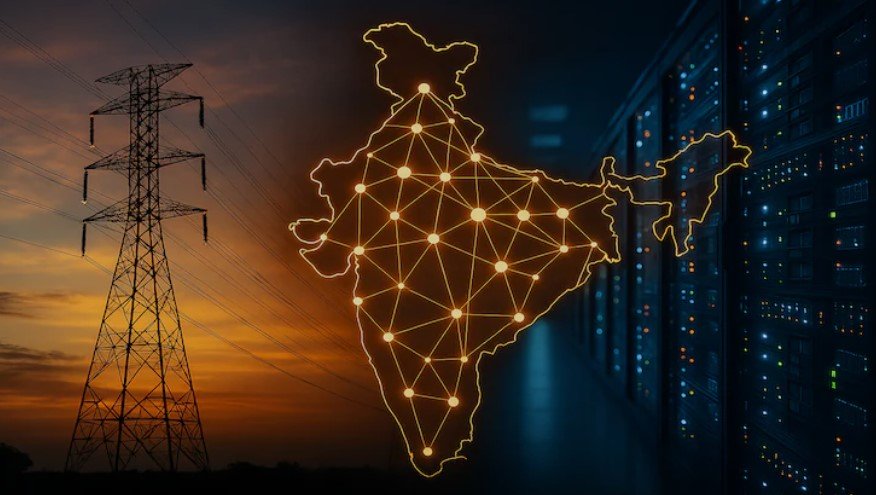
India is currently undergoing one of the most ambitious digital infrastructure expansions in history, with the data center sector poised to attract over $200 billion in investment by 2030. According to recent reports from the India AI Impact Summit 2026, the nation’s total data center capacity is projected to skyrocket from 1.5 gigawatts (GW) in 2025 to nearly 10 GW by the end of the decade. This surge is being fueled by a “perfect storm” of drivers: the rapid adoption of generative AI, strict data localization mandates under the Digital Personal Data Protection (DPDP) Act, and a 20-year tax holiday for foreign cloud providers introduced in the latest Union Budget.
Global hyperscalers and domestic conglomerates are leading this multi-billion dollar charge. Microsoft has committed $50 billion over the next five years to expand its cloud footprint, while the Adani Group recently unveiled a $100 billion roadmap to build a 5 GW national data center platform powered entirely by renewable energy. Not to be outdone, Reliance Industries is developing a 3 GW AI-ready campus in Jamnagar, Gujarat—set to be the largest single facility of its kind in India. This investment is not just confined to established hubs like Mumbai and Chennai; the “Geography Shift” of 2026 sees 10–20 MW edge data centers emerging in Tier-II cities like Lucknow, Visakhapatnam, and Kochi to serve local AI inferencing needs.
However, this explosive growth brings significant operational hurdles, primarily regarding power and water security. Experts at the Council on Energy, Environment and Water (CEEW) warn that data centers could consume over 350 billion liters of water annually by 2030, intensifying stress in already water-scarce regions. To counter this, new projects are pivoting toward “closed-loop” and liquid cooling technologies that can reduce freshwater usage by 70%. Additionally, the shift toward vertical integration—where operators like Adani and Tata build their own solar and wind farms to power their server racks—is becoming the only viable strategy to bypass overstretched national grids. As India targets becoming a global hub for the “Intelligence Century,” these facilities are becoming the new backbone of the nation’s trillion-dollar digital economy.