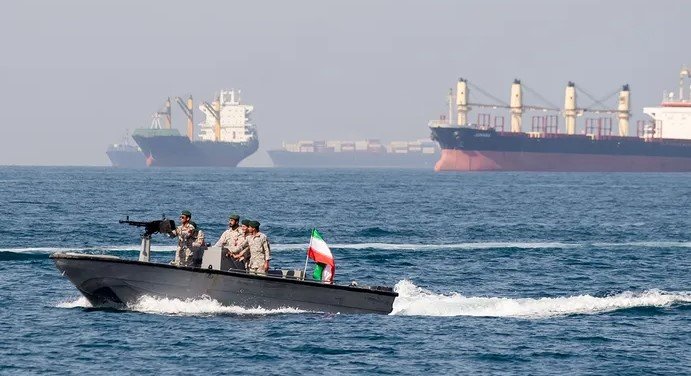
Efforts to restore global shipping through the Strait of Hormuz have hit a critical technical snag, as new reports indicate that Iran is unable to locate many of the sea mines it deployed during the recent month-long conflict. According to intelligence assessments and a report by The New York Times, the Islamic Revolutionary Guard Corps (IRGC) utilized hundreds of small, fast-moving boats to haphazardly seed the waterway with nautical mines following joint U.S.-Israeli airstrikes in early March. However, the lack of a systematic tracking process, combined with strong maritime currents, has caused many of the devices to drift from their original positions. This “unstructured” deployment has created a situation where even the Iranian military does not have an accurate map of its own minefields, making clearance operations exceptionally dangerous and potentially delaying the full reopening of the world’s most vital energy chokepoint.
The technical impasse comes at a delicate moment for international diplomacy. While Tehran technically agreed to reopen the Strait as part of a fragile, two-week ceasefire brokered by Pakistan, the actual implementation has stalled. Iranian Foreign Minister Abbas Araghchi recently hinted at these difficulties, stating that traffic would resume only with “due consideration of technical limitations”—a phrase Western officials view as a candid admission of the lost-mine crisis. In response, the IRGC has issued urgent navigation warnings, advising commercial vessels to follow narrow, alternative pathways rather than established shipping lanes to avoid potential collisions. The situation is further complicated by the fact that neither Iran nor the United States currently possesses the robust, high-speed minesweeping capabilities required to quickly clear a waterway of this scale, meaning the maritime “chokehold” could persist even if a political agreement is reached.
As Vice President JD Vance and Iranian negotiators convene in Islamabad for “make-or-break” peace talks, the status of the Strait remains a primary point of contention. President Donald Trump has repeatedly taken to social media to demand an “immediate and clear” reopening of the passage, warning that the U.S. military is prepared to resume offensive operations if the blockade continues. However, the reality on the water suggests that even with the best intentions, the process of de-mining the Strait will be a painstaking and slow endeavor. With nearly 25 percent of the world’s oil shipments at stake, the inability to locate these “silent sentinels” has turned a logistical hurdle into a major threat to the global economy and the stability of the current ceasefire.