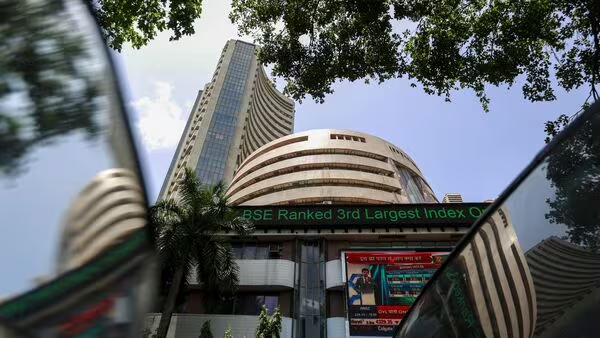
The Indian stock market ended with deep cuts on Monday, 8 December, as investors sold stocks across segments amid mixed global cues. The Sensex closed 610 points, or 0.71%, lower at 85,102.69, while the Nifty 50 settled at 25,960.55, down 226 points, or 0.86%. The BSE Midcap and Smallcap indices crashed 1.73% and 2.20%, respectively.
Investors lost more than ₹7 lakh crore in a single session as the cumulative market capitalisation of the firms listed on the BSE dropped to nearly ₹463.6 lakh crore from ₹471 lakh crore in the previous session.
The main factors behind the market fall include weakness in the Indian rupee, relentless foreign capital outflow, caution ahead of the US Fed’s policy decision, and the surge in Japanese bond yields.
The rupee fell below the 90 mark again and traded near the record low level. A spike in Japanese bond yields stoked fears of unwinding the yen carry trade.
“The market experienced a broad-based decline, slipping below the 26,000 mark as investors turned cautious ahead of this week’s Fed policy decision,” said Vinod Nair, Head of Research, Geojit Investments Limited.
“Despite robust domestic growth figures and the RBI’s recent rate cut, short-term sentiment remains overshadowed by global monetary policy concerns, persistent FII outflows, and currency depreciation. Volatility was further amplified by a surge in Japanese bond yields to multi-year highs, sparking fears of a potential unwinding of the yen carry trade,” Nair said.