The Indian engineered quartz stone industry is facing an unprecedented crisis following the United States’ decision to impose a steep 50% tariff on imports from India, effective August 27. The move has triggered widespread concern among exporters, who are now seeking immediate intervention from the Government of India to prevent large-scale financial distress and potential collapse of the sector.
The Federation of Quartz Surface Manufacturers of India (FQSMI) has submitted a comprehensive relief proposal to Prime Minister Narendra Modi, outlining a series of urgent measures. These include a three-year moratorium on term loan repayments, interest payments, and working capital obligations. The industry is also demanding a 50% interest rate subvention and a reduction in Goods and Services Tax (GST) on quartz surface products from 18% to 5% to boost domestic competitiveness.
FQSMI has further requested exemptions for Export-Oriented Units (EOUs) and Special Economic Zone (SEZ) units from customs duties on domestic tariff area sales, citing the use of 100% indigenous raw materials. Additional demands include permission to utilize 25% of existing working capital limits without additional collateral, import restrictions on competing stone products like marble, and a Rs 500 crore allocation for new market development initiatives.
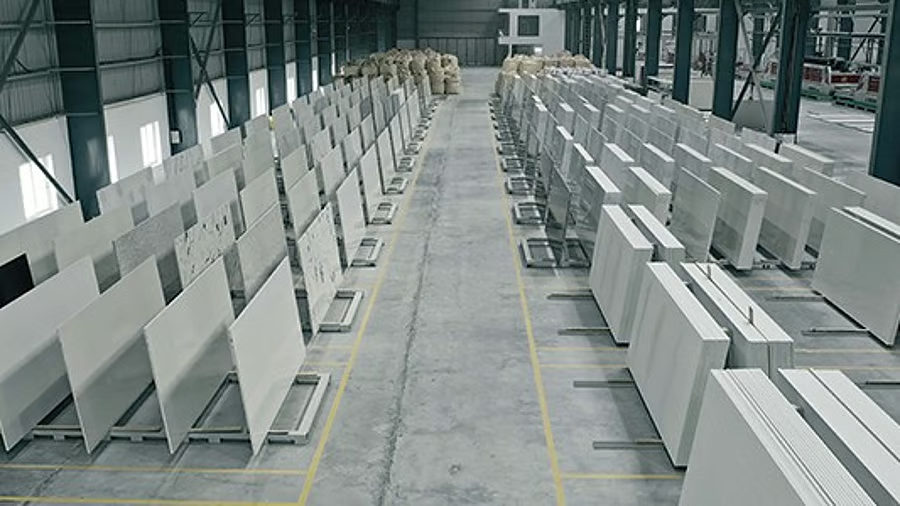
The Indian quartz surface industry, still in its infancy, has invested over Rs 5,000 crore in establishing more than 50 manufacturing units across Gujarat, Rajasthan, Karnataka, Telangana, and Andhra Pradesh. The sector’s annual production capacity exceeds 10 million square meters, with nearly 95% of output destined for the US market. The sudden tariff hike has rendered Indian products uncompetitive, effectively halting exports and stranding consignments at ports.
Industry leaders warn that without swift policy support, the sector could face mass layoffs and insolvency. The engineered quartz segment, which produces slabs for countertops, flooring, and cladding, is highly labor-intensive and employs thousands directly and indirectly.
The government is reportedly reviewing the situation, with discussions underway at the Prime Minister’s Office and the Ministry of Commerce. Exporters are hopeful that targeted relief measures will be announced soon to stabilize the industry and support diversification into alternative markets.
As the tariff deadline approaches, the Indian quartz stone industry stands at a critical juncture, calling for decisive action to safeguard its future and maintain its global standing.