
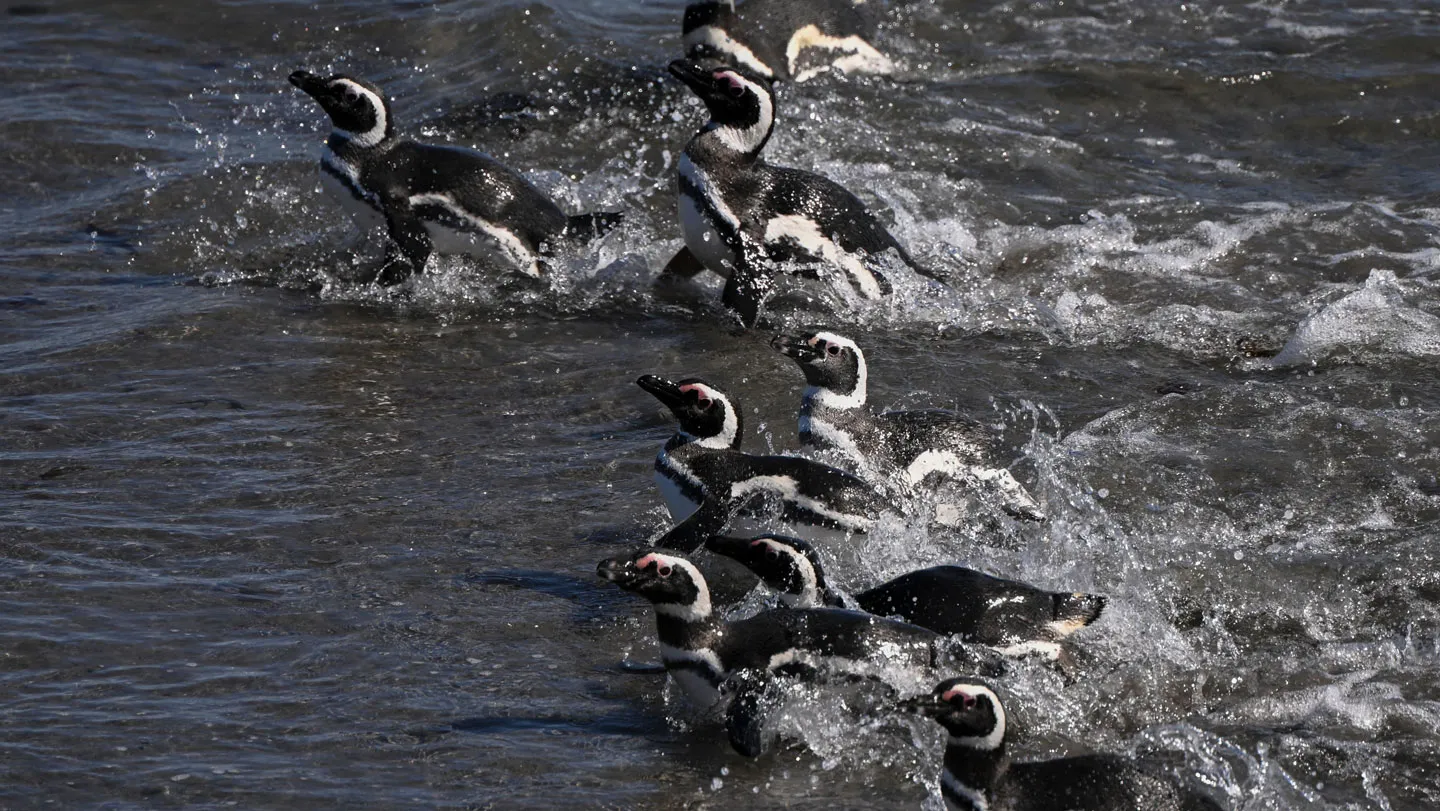
San Lorenzo, Argentina July 17, 2025 — A new study published in PLOS Biology reveals that Magellanic penguins (Spheniscus magellanicus) strategically exploit ocean currents to conserve energy during their extensive foraging trips. The research, conducted by an international team of scientists, tracked 27 adult penguins from the San Lorenzo colony on Argentina’s Valdés Peninsula using GPS and motion sensors to analyze their navigation behavior under varying ocean conditions.
Magellanic penguins, which breed along the coasts of Chile and Argentina from September to February, routinely travel over 100 kilometers to hunt for fish, squid, and shellfish to feed their chicks. The study found that these seabirds adjust their return routes based on the strength of ocean currents. In calm waters, penguins swim directly back to their colony. However, when currents are strong, they adopt a more energy-efficient strategy by drifting with the flow, even if it increases the travel distance.
Researchers observed that penguins often followed S-shaped trajectories aligned with tidal patterns, allowing them to forage opportunistically while minimizing energy expenditure. This behavior suggests a sophisticated understanding of ocean dynamics, enabling penguins to balance navigational accuracy with physiological efficiency.
Despite the absence of visual landmarks in open waters, the penguins demonstrated remarkable precision, with 85% returning within 300 meters of their departure point. Scientists believe this accuracy may stem from a combination of instinct, experience, and possibly non-visual cues such as magnetic fields or mechanosensing.
Lead author Dr. Richard Michael Gunner of the Max Planck Institute for Animal Behavior emphasized the significance of these findings: “Rather than swimming directly home, Magellanic penguins drift laterally with the tides, balancing travel efficiency with opportunistic foraging along the way”.
The study contributes valuable insights into marine animal navigation and raises intriguing questions about how species adapt to dynamic ocean environments. Further research is needed to explore the mechanisms behind current detection and to assess whether similar strategies are employed by other marine animals.

