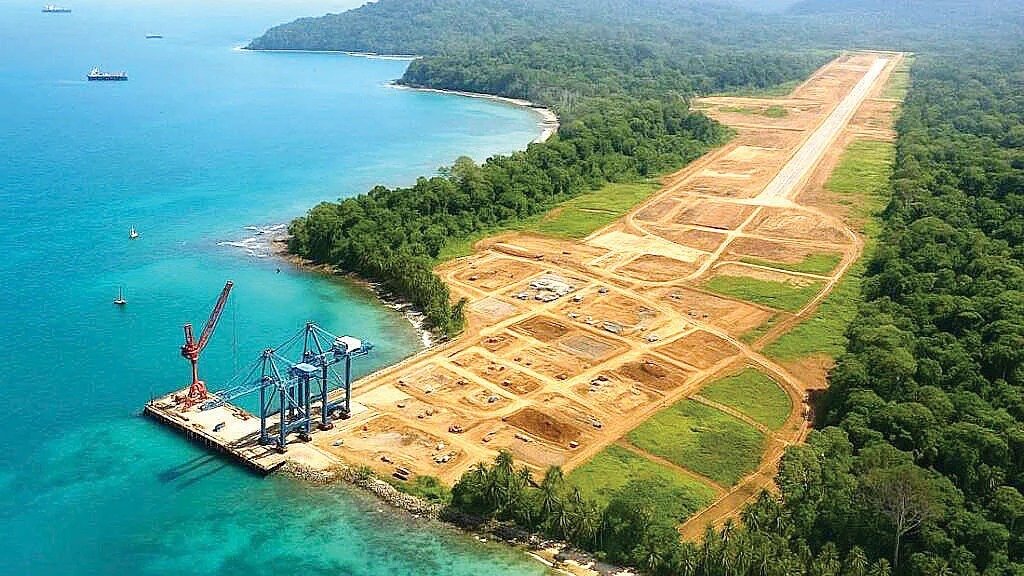
The controversial Great Nicobar Island Project has received a significant boost after the Kolkata bench of the National Green Tribunal (NGT) ruled that environmental safeguards are in place and that the project’s strategic importance justifies limited public disclosure. The decision has reignited debate over the balance between development, environmental protection, and indigenous rights in one of India’s most ecologically sensitive regions.
The Great Nicobar Island Project (GNIP) proposes a massive infrastructure push, including a trans-shipment port, an international airport, township development, and a 450 MVA gas and solar-based power plant. The Centre has argued that the project will enhance India’s maritime and strategic presence in the Indo-Pacific region. It has already received environmental and preliminary forest clearances from the Union Environment Ministry.
However, independent scientists and environmental groups have raised serious concerns. The project is expected to involve the felling of nearly nine lakh trees across approximately 130 sq. km of pristine tropical forest, potentially leading to irreversible biodiversity loss. Environmentalists warn of damage to coral ecosystems and disruption of nesting grounds of the endangered leatherback turtle.
Another major point of contention is the impact on indigenous communities, particularly the Shompen and Nicobarese tribes. Questions have been raised about whether their community rights were fully recognised under the Forest Rights Act. Reports have also emerged alleging pressure on Tribal Council members to sign “surrender certificates” consenting to land diversion.
The NGT had earlier ordered a review of the environmental aspects of the project following petitions highlighting these issues. However, critics argue that the recent order largely endorses the government’s appraisal process without independently scrutinizing the objections raised.
Observers note that history offers cautionary tales, such as large-scale resource extraction projects that left ecological devastation and displaced native populations. They argue that economic and strategic logic alone should not dictate decisions in fragile and remote territories.
While proponents see the project as transformative for national security and economic growth, opponents fear long-term environmental damage and erosion of tribal rights. Whether the Great Nicobar Project ultimately proves beneficial or harmful may only become clear over time, but the ongoing debate underscores the need for transparent, inclusive, and scientifically rigorous decision-making.
NGT Clears Great Nicobar Project; Debate Over Ecology and Tribal Rights Persists