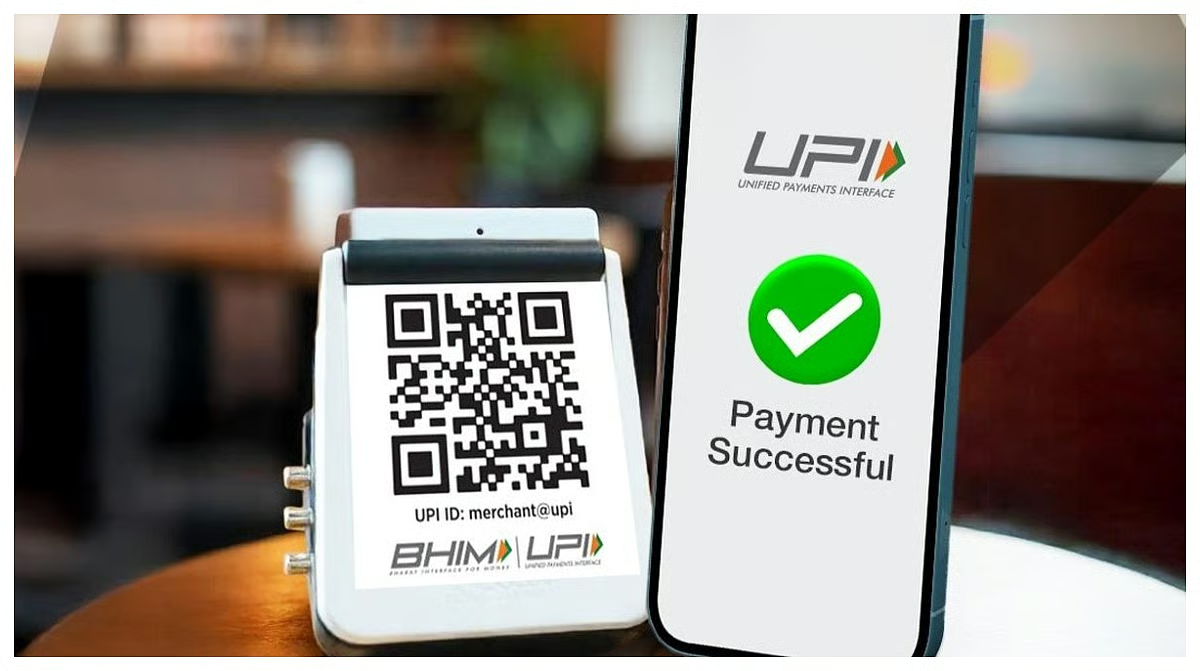
The unified payments interface (UPI) transaction volumes rose 33.5 per cent (year-on-year) to 59.33 billion transactions in the July-September period, as transaction value grew 21 per cent to Rs 74.84 lakh crore, a report showed on Thursday. India reached 709 million active UPI QRs, marking a 21 per cent increase since July 2024. Dense QR acceptance across kiranas, pharmacies, transport hubs, and rural markets has made scan-and-pay the default payment mode nationwide, according to the report by Worldline India.
Person-to-merchant (P2M) transactions continued to outpace person-to-person (P2P), reflecting UPI’s dominance in everyday retail payments. P2M transactions were up 35 per cent to 37.46 billion transactions while P2P transactions rose 29 per cent to 21.65 billion transactions, the report said. The third quarter (Q3 2025) further reinforced India’s position as the world’s most dynamic real-time payments economy — where every scan, tap, and click is reshaping consumer and merchant behaviour.
The average ticket size declined to Rs 1,262 (from Rs 1,363), highlighting increased usage for micro-transactions such as mobility, food, healthcare essentials, and hyperlocal commerce. Point of sale (PoS) terminals grew 35 per cent to 12.12 million (July 2024–July 2025). Bharat QR stood at 6.10 million, witnessing marginal decline amid the shift toward UPI QR dominance. Private banks led acceptance deployment, accounting for 84 per cent market share. While credit card issuance grew by 8 per cent (on-year) to 113.39 million cards, debit cards reached 1.02 billion and prepaid cards stood at 470.1 million.