
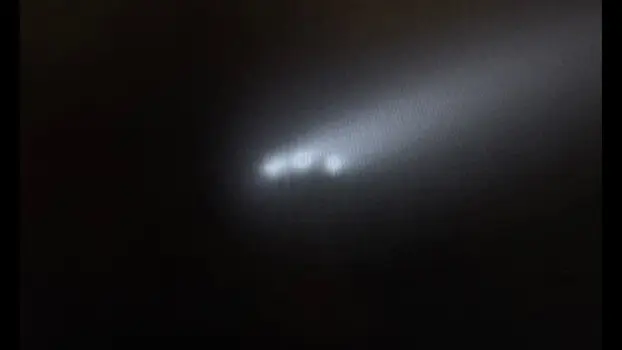
In a dramatic celestial event, Comet ATLAS (C/2025 K1) has broken apart into at least three brighter fragments, stunning astronomers and skywatchers worldwide. The breakup, observed in mid-November, has made the comet even more visible, with its unusual golden hue distinguishing it from most other comets.
Discovered on May 24, 2025, Comet ATLAS had been traveling through the Ursa Major constellation. On November 11, Italian astronomers at the Asiago Observatory first recorded signs of disintegration, capturing high-resolution images that revealed three distinct pieces drifting apart. Two of the fragments appeared nearly identical in brightness and size, separated by roughly 2,000 kilometers, while a third, dimmer fragment trailed behind.
Photographer Michael Jager documented the breakup between November 12 and 20, producing an animation that shows the comet exploding into luminous parts over successive nights. NASA and the Virtual Telescope Project also confirmed the rare event, with Gianluca Masi’s images highlighting the comet’s intensified glow.
What makes Comet ATLAS stand out is its unique golden coloration, unlike the typical green glow of most comets. Amateur astronomer Dan Bartlett noted this unusual hue, and researchers suggest it may be due to the comet’s lack of certain carbon molecules commonly found in other comets. This rare composition has made ATLAS a favorite target for backyard telescopes, as its brightness and color are easily distinguishable in the night sky.
Astronomers believe the breakup was triggered by the comet’s close brush with the Sun in October, which destabilized its structure. Such disintegration events are not uncommon for comets, but the visibility and brilliance of ATLAS’s fragments make this occurrence particularly remarkable.
Comet ATLAS continues to be visible in the northern sky, offering enthusiasts a rare chance to witness a comet in the process of breaking apart. Scientists are closely monitoring its trajectory and brightness, as the fragments may provide new insights into cometary composition and behavior.

